Carpenter ant void inversion targets the structural interior of wood members rather than applying surface-level perimeter sprays that leave primary parent colonies undisturbed. In historic Wayne County residential…
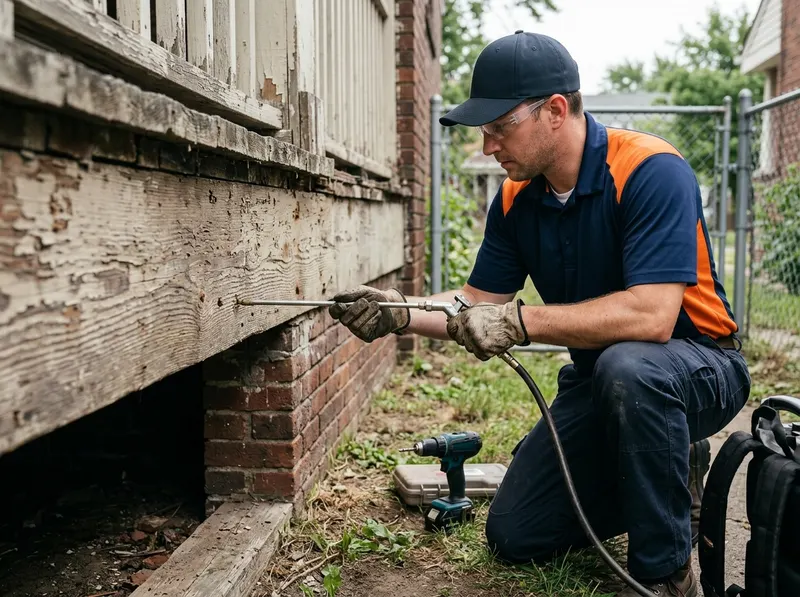
Carpenter ant void inversion targets the structural interior of wood members rather than applying surface-level perimeter sprays that leave primary parent colonies undisturbed. In historic Wayne County residential architecture, ranging from the 1920s brick homes in Palmer Woods and Boston-Edison to Victorian framing in Corktown, Woodbridge, and Indian Village, carpenter ants establish satellite nests inside subfloors, window headers, and sill plates compromised by moisture. Unlike subterranean termites that ingest cellulose, carpenter ants excavate smooth nesting galleries directly within load-bearing timber, depositing coarse wood shavings mixed with insect fragments known as frass. The void inversion method locates these internal hollows through acoustic monitoring and wall temperature differentials, drills unobtrusive 1/8-inch access points into the affected framing, and injects targeted active agents under balanced pressure to saturate the gallery network entirely.
Selecting localized void injection over continuous broadcast spraying addresses the specific biological nesting habits of timber-infesting colonies. A broadcast perimeter spray provides a temporary exterior buffer, but it fails to eliminate satellite queens and developing larvae sequestered deep within wall studs or ceiling joints in multi-story homes in Rosedale Park, Green Acres, and Bagley. The engineering trade-off centers on intervention depth: topical applications require ongoing monthly chemical exposure inside living spaces, whereas direct timber void defense requires precision drilling to neutralize the internal colony core directly, followed by clean cosmetic sealing of all access ports.
Property owners can prepare residential structures by clearing access to exterior foundations and clearing 2 feet of space along the perimeter of interior basement walls or attic knees. A certified inspection first identifies whether nesting is confined to an isolated moisture leak, such as around historic gutter aprons or ground-contact porches near Rouge Park or the Detroit Institute of Arts, or spans multiple levels. After micro-injection seals the nesting galleries, technicians apply a non-repellent exterior perimeter barrier along the foundation rim joists to intercept foraging trails moving from nearby mature shade trees into the home framing.
Every job gets a firm, written price after a free on-site visit.
Tell us about your carpenter ant void inversion & timber defense job in Detroit and we'll send a clear, written quote, usually the same day.
 Fenvik Pest Response